


We all want our outdoor spaces to look good no matter the season. It takes some thought to make sure your outdoor patio design works all year round. We’ll look at how to pick plants that bloom for a long time and add things that stay green in winter. We also need to think about how to arrange seating and make the space look interesting with different textures and colors. Let’s plan a patio that’s great in spring, summer, fall, and winter.
Key Takeaways
- Plan your outdoor patio design with plants that offer color across multiple seasons.
- Incorporate evergreen plants and structures for visual interest during colder months.
- Arrange seating and gathering spots thoughtfully for comfort and flow, using varied textures and colors to add depth.
Designing Your Outdoor Patio For All Seasons
Creating an outdoor patio that looks good year-round takes a bit of thought. We want our outdoor spaces to be enjoyable no matter what the weather is doing. This means picking plants that offer something special in every season and making sure there’s visual interest even when everything’s covered in snow.
Selecting Plants With Extended Bloom Times
When we choose plants, we often think about when they flower. But for a patio that stays appealing, we should look for plants that bloom for a long time or have different attractive features throughout the year. Some perennials, like certain types of coneflowers or salvias, can bloom from early summer right up until the first frost if we deadhead them. Others, like hydrangeas, offer beautiful blooms that can dry on the stem and provide winter interest. We should also consider plants with interesting foliage. Heucheras come in a wide range of colors, from deep purple to bright lime green, and their leaves stay attractive for most of the year. Even grasses can be fantastic, providing texture and movement in the summer and standing tall with attractive seed heads in the fall and winter.
- Consider plants that offer multiple seasons of interest.
- Look for varieties known for long bloom periods.
- Don’t forget foliage color and texture – it’s important even when flowers aren’t present.
We aim for a layered approach, where something is always catching our eye. This might mean a mix of early spring bulbs, summer-blooming perennials, fall-colored shrubs, and evergreens that hold their own against the winter sky.
Incorporating Evergreen Elements For Winter Interest
Evergreens are our best friends when it comes to winter patios. They keep their leaves or needles, providing color and structure when deciduous plants have dropped theirs. Think about dwarf conifers, which come in many shapes and sizes, offering shades of green, blue, and even yellow. Boxwood is another classic choice, great for low hedges or as a specimen plant. Its dense foliage stays green all winter. We can also use ornamental grasses that dry well, like switchgrass or feather reed grass, whose upright seed heads catch the light and add a delicate touch. Even some broadleaf evergreens, like certain rhododendrons or hollies, can add a splash of color and texture. Strategically placed evergreens can make a patio feel complete, not bare, even in the coldest months.
- Dwarf conifers (e.g., dwarf Alberta spruce, blue star juniper)
- Broadleaf evergreens (e.g., boxwood, holly, rhododendron)
- Ornamental grasses that hold their form and seed heads through winter
Creating A Functional And Beautiful Outdoor Patio Design
Layering Textures And Colors For Visual Depth
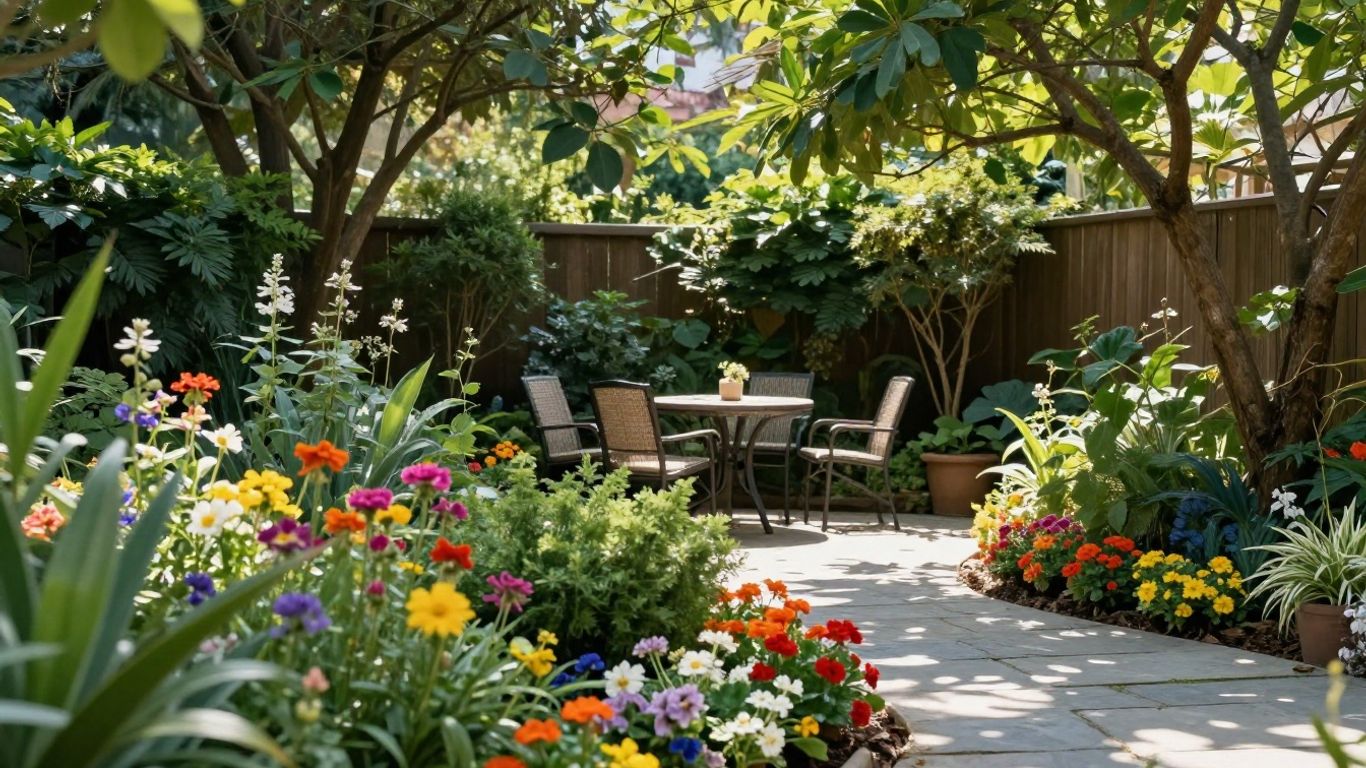
When we think about our patios, we often focus on the big stuff, like the furniture or the grill. But the real magic happens when we start playing with textures and colors. It’s how we make a space feel alive and interesting, not just flat and boring. We want to create a look that draws the eye and makes us want to spend time there. Think about mixing rough stone or brick with smooth wood or metal. That contrast is what makes things pop. We can also use plants to add different textures – spiky ornamental grasses next to soft, leafy hostas, for example. Color is another big one. We don’t have to go wild, but a few well-placed pops of color can really change the mood. Maybe it’s bright cushions on neutral chairs, or a colorful planter with some flowers. Even the color of the patio material itself matters. A warm, earthy tone feels different than a cool, modern gray. It’s all about building up these little details so the whole area feels rich and inviting.
- Consider the existing colors of your home and garden.
- Think about how light will play on different surfaces throughout the day.
- Don’t be afraid to mix materials; contrast is good.
We aim to build a patio that feels like a natural extension of our home, a place where every element works together to create a pleasing visual experience. It’s about making choices that add character and comfort, turning a simple outdoor area into a destination.
Strategic Placement Of Seating And Gathering Areas
Having a great patio means nothing if we can’t actually use it comfortably. That’s where thinking about where we put things comes in. We need to figure out how we’ll actually use the space. Are we mostly eating out here? Or is it more for lounging and talking? This will tell us where the dining table should go and where the comfy chairs should be. We also need to think about the flow. Can people walk around easily without bumping into things? We don’t want to feel cramped. Consider the sun and shade, too. Maybe one area is perfect for morning coffee in the sun, while another spot needs shade for hot afternoons. Good placement makes all the difference in how functional and enjoyable the patio becomes. It’s not just about putting furniture down; it’s about designing zones within the patio that serve different purposes. We might want a spot for grilling that’s close to the kitchen door, and a quieter corner for reading. Thinking ahead about these different uses helps us arrange everything so it just works.
Bringing It All Together
So, we’ve talked about how to make our yards look good all year. It’s not just about planting pretty flowers for spring or colorful leaves for fall. We need to think about the whole cycle, from the first buds to the last frost. By picking the right plants and planning ahead, we can have a garden that’s always interesting. It takes a bit of effort, sure, but seeing our outdoor spaces change and stay lively through every season is really rewarding. Let’s get out there and make our yards something special, no matter the weather.
Frequently Asked Questions
How can we make our patio look good all year long?
To achieve a patio that’s always appealing, we should pick plants that bloom for a long time, meaning they’ll show off their colors over many months. Also, adding plants that stay green even in winter, like certain shrubs or trees, will give our outdoor space some life when everything else is bare. This way, we avoid dullness during colder seasons.
What makes an outdoor space both practical and pretty?
Creating a patio that’s both useful and attractive involves a few key ideas. We can make it visually interesting by mixing different textures and colors in our plants and decorations, which adds depth. It’s also important to think about where we’ll put our seating and areas where we’ll hang out. Placing these spots thoughtfully ensures everyone can comfortably gather and enjoy the space.
Are there specific plants we should consider for continuous color?
Yes, indeed! When choosing plants, we should look for varieties known for their extended flowering periods. For instance, some perennials bloom from early summer right through to the first frost. We might also consider shrubs that offer colorful berries in the fall or interesting bark for winter. Researching plants native to our area that have long bloom cycles is often a great starting point for continuous visual interest.
