


Spring is just around the corner, and now is the perfect time to start thinking about refreshing our outdoor spaces. We’ve put together some ideas to help you plan your yard projects. Our goal is to make your garden look great and work well for you. Let’s get our yards ready for warmer weather.
Key Takeaways
- We can explore different hardscape design ideas for patios and walkways that are both practical and look good.
- Adding water features or fire pits can make our outdoor areas more inviting.
- We should pick materials that last and think about how plants fit with our hardscape choices.
Elevate Your Outdoor Living With Inspiring Hardscape Design Ideas
Looking for ways to bring a fresh look to your yard this spring? We know a well-planned hardscape not only organizes your outdoor space, but it also becomes a great spot for family and friends to hang out. Hardscape features—like patios, walkways, and fire pits—are the bones of any inviting backyard. Let’s walk through some tried-and-true ways to get the most from your outdoor living space.
Creating Functional Patios and Walkways
Planning a new patio or some walkways? Think about how you’ll actually use the space. Whether it’s for small gatherings or just relaxing after work, a good design centers on function.
- Patio size matters: Make sure there’s enough room to fit furniture without feeling cramped.
- Choose materials like poured concrete, natural stone, or pavers. Each brings its own look and feel.
- Accessibility is worth a thought, too—level surfaces make it easier for everyone to get around.
| Material | Durability | Maintenance | Cost (per sq ft) |
|---|---|---|---|
| Concrete | High | Low | $6 – $13 |
| Natural Stone | Very High | Medium | $15 – $30 |
| Brick Pavers | Medium | Medium | $8 – $20 |
Nothing beats stepping onto a smooth patio that feels like an extension of our living room—out in the sun or under the stars.
Incorporating Water Features and Fire Elements
Water and fire can add so much character. That gentle sound from a small fountain or the cozy glow of a fire pit really changes how the backyard feels.
Our favorite ideas include:
- Installing a low-maintenance water feature, like a bubbling urn or small pond, near a seating area.
- Building a simple, safe fire pit or bowl—perfect for spring nights.
- Adding built-in seating around the fire area, whether it’s stone benches or moveable chairs.
When we add these features, we notice we spend more evenings outdoors and the yard feels much more inviting. Walk outside, hear water trickling, and feel that warmth from the fire—it’s simple, but it makes a difference.
Designing Sustainable and Beautiful Garden Features
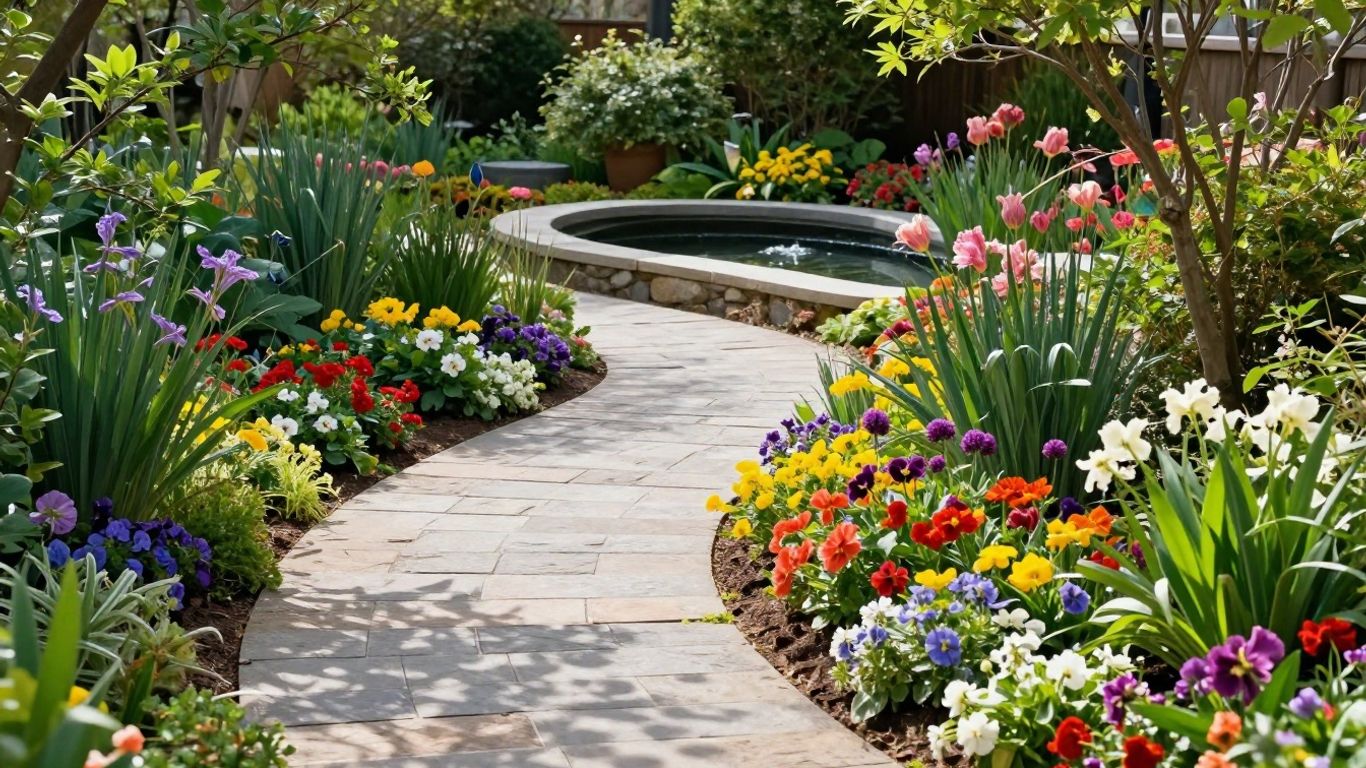
When we think about our outdoor spaces, we often focus on the big picture – the patio, the seating area. But the garden itself, the living part of our landscape, deserves just as much attention. We want it to look good, sure, but we also want it to last and be kind to the environment. That’s where thoughtful design comes in.
Choosing the Right Materials for Longevity
Picking materials isn’t just about looks; it’s about how they’ll hold up over time and what impact they have. We’ve found that some choices are just better for the long haul. For instance, using locally sourced stone for retaining walls or pathways means less transportation, which is good for the planet. It also means the material is already suited to our local climate. We also look at recycled options, like reclaimed wood for garden beds or crushed recycled glass for decorative mulch. These not only reduce waste but can add a unique character to our gardens.
Here’s a quick look at some material considerations:
- Wood: Opt for naturally rot-resistant types like cedar or redwood, or consider composite materials made from recycled plastics and wood fibers.
- Stone: Natural stone, like granite or bluestone, is durable but can be heavy and costly. Local options are usually best.
- Gravel/Aggregate: Good for pathways and drainage. Consider recycled concrete or crushed brick for a sustainable touch.
- Concrete: Can be durable, but its production has a high carbon footprint. Look for mixes with fly ash or slag to reduce impact.
Integrating Greenery with Hardscape Elements
This is where the magic really happens, blending the solid structures with the living plants. We don’t want just a patio with plants around it; we want the plants to feel like part of the structure. Think about planting climbing vines on a pergola or installing a green wall on a retaining wall. These elements soften the hard edges and bring life and color.
We also consider plants that work with our hardscape. For example, choosing drought-tolerant plants around a gravel path means less watering and maintenance. Or, planting native species near a stone patio provides habitat for local wildlife and requires less intervention from us. It’s about creating a system where everything supports everything else.
Here are a few ways we like to combine plants and structures:
- Vertical Gardens: Use walls or fences to grow herbs, flowers, or even small vegetables. This saves space and adds a living facade.
- Green Roofs/Walls: For sheds or small structures, a living roof or wall can help with insulation and stormwater management.
- Planting Pockets: Integrate small planting areas directly into patios or pathways, using low-growing, tough plants that can handle some foot traffic.
- Edible Landscaping: Blend fruit trees, berry bushes, and vegetable beds into the overall design, making the garden both beautiful and productive.
We’ve found that the most successful gardens are those that feel like they’ve grown organically, even if they’ve been carefully planned. It’s about letting nature do some of the work and appreciating the beauty in that process. We aim for a look that’s both intentional and natural, a balance that takes a bit of thought but pays off in the long run.
Ready to Get Started?
We hope this guide has given you a good starting point for your spring landscape plans. Thinking ahead now means you can really enjoy your yard when the weather warms up. We’ve covered a lot, from picking the right plants to thinking about how you’ll use your outdoor space. Remember, it doesn’t have to be perfect right away. Start with a few key projects and build from there. We’re excited to see what you create this spring!
Frequently Asked Questions
When is the best time to start planning our spring garden projects?
We suggest getting your ideas down on paper during the winter months. This gives us plenty of time to pick out the best plants and materials before the busy spring season arrives and everything is picked over.
What are some easy ways to add beauty to our yard without a lot of work?
Consider adding a simple water feature, like a small bubbling fountain, or a cozy fire pit for evening gatherings. These elements can make a big difference in how your outdoor space feels and functions.
How can we make our garden look nice and also be good for the environment?
We can choose plants that don’t need a lot of water and use materials for our patios and paths that are built to last. Mixing plants with stone or wood paths creates a beautiful look that’s also kinder to the planet.
