


Planning a garden for Minnesota can feel like a puzzle, especially with our distinct seasons. We want our yards to look good all year, but getting there means thinking about what actually grows well here. That’s where understanding our local climate and picking the right plants comes in. If you’re looking for help with this, professional landscape design services can make a big difference in creating a yard you’ll love.
Key Takeaways
- Knowing your specific hardiness zone and any small yard variations helps pick plants that will survive winter and summer heat.
- Picking plants that are native to Minnesota or are perennials means less work later and a garden that looks good year after year.
- Matching plants to where you put them in your yard, considering sun and soil, and planning for different seasons makes for a beautiful space throughout the year.
Understanding Your Minnesota Climate For Landscape Design Services
When we think about making our yards look good here in Minnesota, the first thing we really need to get a handle on is our weather. It’s not just about the pretty flowers; it’s about picking plants that can actually survive our winters and summers. Our climate dictates what will grow and what won’t.
Assessing Your USDA Hardiness Zone
So, what’s a hardiness zone? Basically, it’s a map that tells us the average lowest winter temperature in a region. For Minnesota, we’re mostly in zones 3 and 4, with a little bit of zone 5 along the southern edge. This is super important because if you buy a plant rated for zone 7, for example, it’s probably not going to make it through a typical Minnesota winter. We need to look for plants that are rated for our specific zone or colder.
Here’s a general idea:
- Zone 3: Very cold winters, with average lows down to -40°F.
- Zone 4: Cold winters, with average lows between -30°F and -20°F.
- Zone 5: Moderately cold winters, with average lows between -20°F and -10°F.
Knowing your zone helps us avoid the heartbreak of seeing a plant die off after its first winter.
Considering Microclimates in Your Yard
Now, even within your own yard, things can be different. This is what we call a microclimate. Think about it: a spot right next to a south-facing brick wall will be warmer than a shady area under a big pine tree. Or maybe there’s a low spot where cold air settles, making it colder than the rest of the yard.
We need to pay attention to these little differences. For instance:
- Sunny Spots: These get more heat and might dry out faster. Good for plants that like sun and warmth.
- Shady Spots: These stay cooler and moister. Better for plants that prefer shade.
- Windy Areas: Strong winds can dry out plants and even damage them. We might need to choose tougher plants or provide some shelter.
- Low-Lying Areas: Frost can linger here longer, so be careful with tender plants.
Taking a walk around your property at different times of the day and year can reveal these hidden pockets of warmth or cold. It’s like being a detective for your garden.
By understanding both the general climate zone and the specific microclimates in our yards, we can make much smarter choices about what plants to bring home. This saves us time, money, and a lot of disappointment down the road.
Selecting Plants That Thrive In Minnesota’s Seasons
When we think about planting in Minnesota, we really need to consider how our plants will handle the full swing of our weather. It’s not just about pretty flowers in June; it’s about plants that can make it through a tough winter and then bounce back strong in the spring. Choosing plants that are suited to our climate is the first step to a landscape that looks good year after year without a ton of fuss.
Choosing Native Plants for Resilience
We’ve found that native plants are often the easiest way to go. These are plants that have grown in Minnesota for a long time, so they’re already adapted to our soil, our rainfall patterns, and our temperature extremes. They don’t need a lot of special care once they’re established. Plus, they’re great for local wildlife – birds, bees, and butterflies love them.
Here are a few reasons why we lean towards natives:
- Less Watering: Once their roots are down, they usually don’t need much extra water, even during dry spells.
- Fewer Pests and Diseases: They’re naturally more resistant to the bugs and sicknesses that bother non-native plants.
- Support Local Ecosystems: They provide food and shelter for the animals that live here.
- Low Maintenance: Honestly, they just tend to do their own thing without needing constant attention.
Some good examples to start with include Coneflowers (Echinacea), Asters, and various types of grasses like Little Bluestem. These are tough and pretty, giving us that natural Minnesota look.
Incorporating Perennials for Long-Term Beauty
Beyond natives, we also like to use perennials. These are plants that come back year after year from their roots. Unlike annuals, which you have to replant every spring, perennials give you a solid foundation for your garden beds. They might cost a bit more upfront, but over time, they save us money and effort.
Think about how perennials can fill in your garden. You can choose them for different bloom times to have color from early spring all the way into fall. Some perennials even offer great fall color or interesting seed heads that look good in winter.
Here’s a quick look at what to think about with perennials:
- Bloom Time: Mix early, mid, and late-season bloomers for continuous color.
- Height and Spread: Plan where they’ll go so taller ones don’t shade out shorter ones, and give them enough room to grow.
- Sunlight Needs: Make sure they get the right amount of sun or shade for where you plant them.
When selecting perennials, it’s helpful to think about their mature size. A small plant in the nursery can grow quite large, and overcrowding can lead to problems like poor air circulation and increased disease risk. Always check the plant tag for its full potential size.
Some reliable perennials that do well here include Peonies, Daylilies, Hostas (for shade), and Sedum. They provide structure and beauty without needing to be replaced annually, making our landscape work simpler in the long run.
Designing Your Minnesota Landscape With Purpose
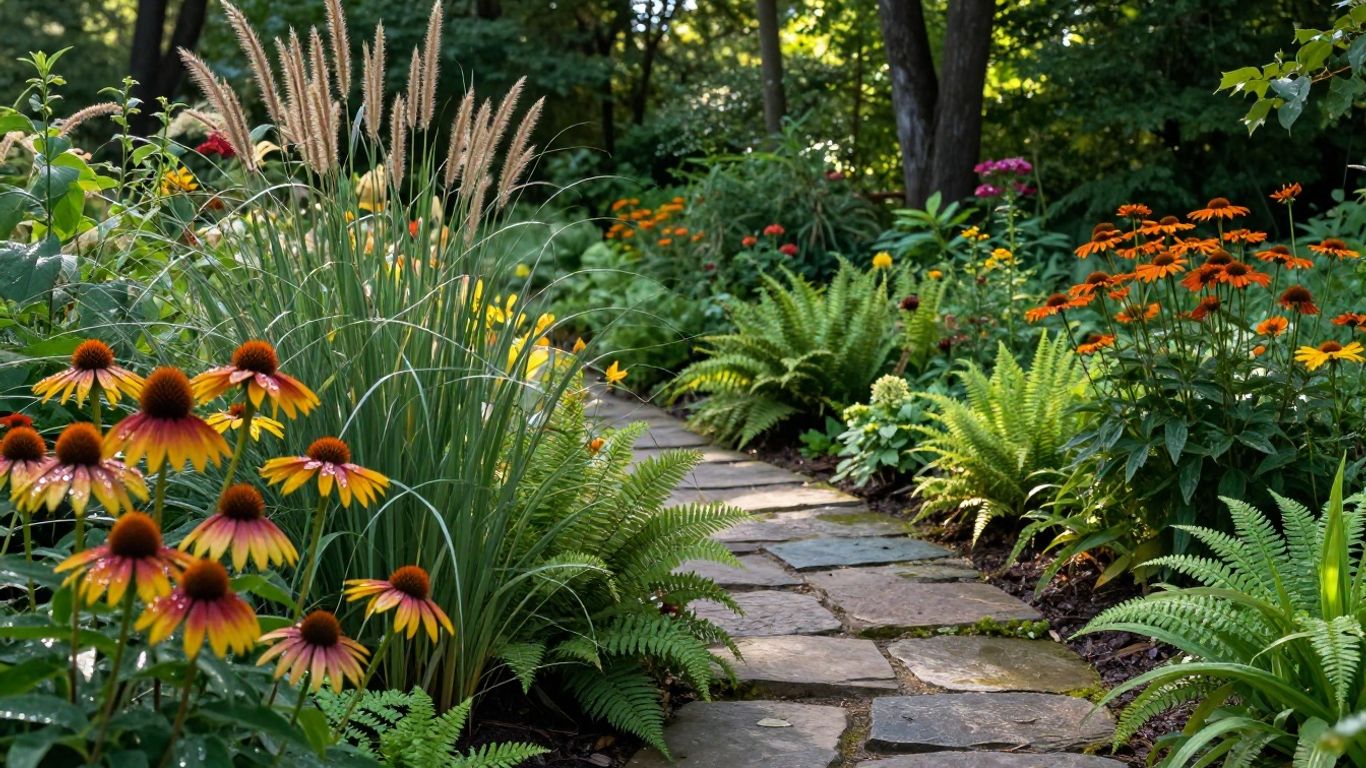
Now that we’ve talked about the climate and picking plants that can handle our Minnesota weather, let’s get down to actually putting it all together. Designing your landscape isn’t just about making things look pretty; it’s about creating a space that works for you and the environment. We want our yards to be functional and beautiful, year after year.
Matching Plants to Site Conditions
This is where we get practical. You can’t just pick a plant because you like the look of it. We need to be honest about what our yard actually offers. Think about the sun – how much does each part of your yard get, and when? Is it full sun all day, or just a few hours in the morning? Then there’s the soil. Is it heavy clay that holds water, or sandy and drains fast? We also need to consider how much water is available. Some spots might get rain naturally, while others might need extra watering, especially during dry spells. And don’t forget about wind. Some plants can’t handle strong gusts, while others might actually benefit from it.
Here’s a quick way to think about it:
- Sun Exposure: Full Sun (6+ hours direct sun), Part Sun/Shade (4-6 hours direct sun), Full Shade (less than 4 hours direct sun).
- Soil Type: Clay, Loam, Sandy, Rocky.
- Moisture Levels: Dry, Average, Moist, Wet.
- Wind Exposure: Sheltered, Moderate, Exposed.
Choosing plants that fit these conditions is key to a healthy, low-maintenance landscape. If you put a sun-loving plant in a shady spot, it’s just going to struggle. Likewise, a plant that needs wet feet won’t do well in a dry, sandy area.
Planning for Year-Round Interest
Minnesota landscapes can be pretty dramatic throughout the year, and we can use that to our advantage. It’s not just about what looks good in July. We want our yards to have something interesting happening in every season. This means thinking about:
- Spring: Early blooms, fresh green leaves emerging. Think about bulbs, serviceberries, or early flowering shrubs.
- Summer: Full foliage, vibrant flowers, maybe some fruit. This is when your colorful perennials and flowering trees really shine.
- Fall: Amazing color changes in leaves, interesting seed heads, and berries that birds love. Maples, oaks, and ornamental grasses are great for this.
- Winter: Structural elements like interesting bark, evergreen branches, and persistent seed heads or berries. Dogwoods with colorful stems, evergreens, and grasses that hold their form are good choices.
We often get caught up in the summer bloom, but a truly successful Minnesota landscape offers visual appeal even when the snow is flying. Thinking about form, texture, and color across all four seasons makes a big difference.
By carefully matching plants to where they’ll be planted and planning for interest throughout the year, we can create a Minnesota landscape that is not only beautiful but also resilient and enjoyable no matter the season.
Wrapping Up Your Minnesota Garden Plans
So, we’ve talked a lot about picking the right plants for our Minnesota yards. It might seem like a lot to think about, with our cold winters and sometimes tricky soil. But really, it comes down to knowing your spot and what you want to see grow. We can make our outdoor spaces look great, even with our unique climate. Take your time, look around your yard, and don’t be afraid to ask for help if you need it. A little planning now means a beautiful yard later, one that we can all enjoy for years to come.
Frequently Asked Questions
Why is knowing our Minnesota zone important when picking plants?
Understanding our USDA Hardiness Zone is like knowing the temperature range our plants can handle. Minnesota has cold winters, so we need to pick plants that can survive freezing temperatures and bounce back in the spring. Picking the right zone helps us avoid plants that will just die when it gets cold.
What are ‘microclimates’ and how do they affect our plant choices?
Think of microclimates as small, unique weather spots in our yards. Maybe one side of our house gets more sun, or a certain area is protected from the wind by a fence. These little differences can change how warm or cold a spot gets, affecting which plants will grow best there. We should look at these spots closely before deciding what to plant.
How can we make our yard look good all year long in Minnesota?
To have a yard that’s interesting in every season, we should choose plants that offer something special at different times. This means picking some plants that bloom in spring, others that have nice colors in the fall, and maybe even some evergreens that stay green all winter. Planning for this year-round beauty means our landscape will always have something to admire.
