


How Landscaping Can Improve Drainage Before Freeze-Up in Rochester, MN
September in Rochester, Minnesota is a transition month. We still get warm afternoons, but cooler nights, heavier dew, and fall rainstorms remind us that winter is not far away. For homeowners, September is also one of the best times of year to look at how water is moving across the property before the ground freezes.
At Distinctive Lawn & Landscape Inc, we know that drainage issues rarely fix themselves. A low spot in the lawn, water pooling near the foundation, soggy mulch beds, or washed-out rock areas can all become bigger problems once freezing temperatures arrive. When water sits in the wrong place and then freezes, it can damage turf, shift hardscapes, create icy walkways, and increase the risk of basement moisture problems.
The good news is that smart landscaping can dramatically improve drainage before freeze-up. With the right grading, soil work, plantings, rock, edging, and drainage features, your landscape can help direct water where it belongs.
Key Takeaways:
- September is an ideal time in Rochester, MN to correct drainage problems before the ground freezes.
- Proper grading, downspout extensions, drainage rock, and strategic plantings can help move water away from foundations and high-traffic areas.
- Addressing wet spots now can prevent winter ice buildup, lawn damage, hardscape shifting, and spring drainage headaches.
- Distinctive Lawn & Landscape Inc provides local experience, practical solutions, and professional installation built for Southeast Minnesota weather.
Why Drainage Matters Before Minnesota Freeze-Up
In September, Rochester often sees a mix of late-summer thunderstorms and early fall rain. Lawns may still be actively growing, but the soil can become compacted from summer foot traffic, mowing, and dry spells followed by heavy rainfall. If water cannot soak in or drain properly, it collects in low areas.
Once temperatures drop in late fall, those wet areas can freeze. That creates several problems around the home:
- Ice patches on sidewalks, driveways, and patios: Poor drainage can send water across hard surfaces where it freezes and becomes a slipping hazard.
- Foundation pressure: Water that pools near the foundation may freeze and expand, adding stress to the surrounding soil.
- Lawn damage: Saturated turf is more vulnerable to winterkill, snow mold, and root damage.
- Hardscape movement: Freeze-thaw cycles can shift patios, retaining walls, edging, and paver walkways if water is trapped beneath them.
- Spring mud problems: Areas that go into winter wet often thaw into messy, muddy trouble spots in spring.
Improving drainage before freeze-up is not just about making the yard look better today. It is about protecting your property through winter and setting your lawn and landscape up for a healthier spring.
Start With Proper Grading Around the Home
One of the most important drainage improvements is proper grading. The soil around your home should gently slope away from the foundation so rainwater and melting snow do not collect against the house.
In Rochester neighborhoods, we often see foundation beds that have settled over time. Mulch, rock, and soil may look neat on the surface, but if the grade underneath slopes toward the house, water can still move in the wrong direction. September is a great time to correct this because the ground is usually workable, and there is still enough growing season left for disturbed lawn areas to recover.
Professional grading may include reshaping lawn areas, adding soil where settling has occurred, creating shallow swales, or adjusting landscape beds to guide water away from the home. The goal is not always a dramatic change. Sometimes a subtle correction makes a major difference.
Use Downspout Extensions and Drainage Solutions
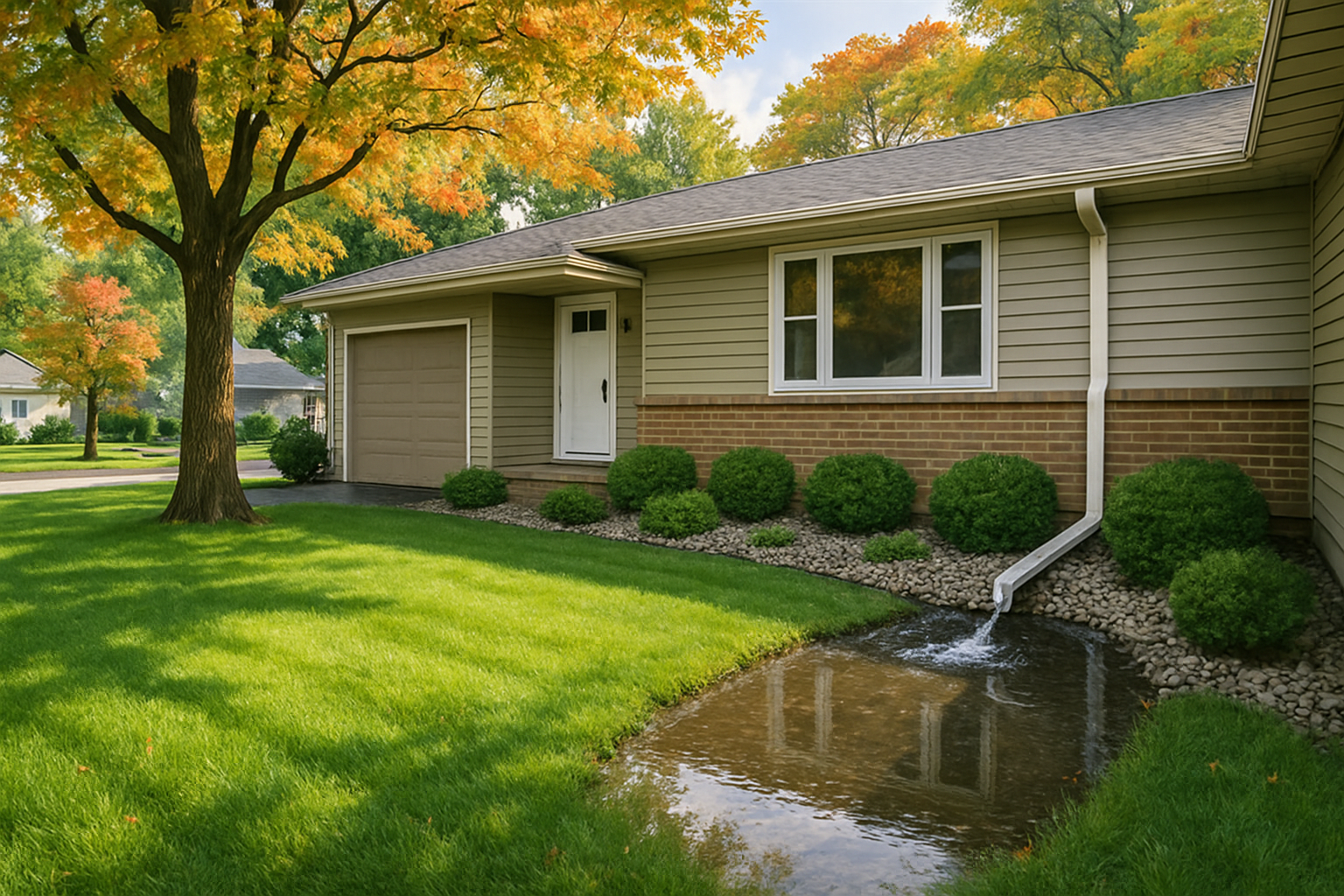
Gutters and downspouts collect a tremendous amount of water during a fall rain. If downspouts empty too close to the foundation, all that roof water is concentrated in one place. Before freeze-up, it is important to make sure downspouts are moving water safely away from the house.
Depending on the property, solutions may include:
- Extending downspouts farther into the yard where water can disperse safely
- Installing underground drain tile to carry water away from the foundation
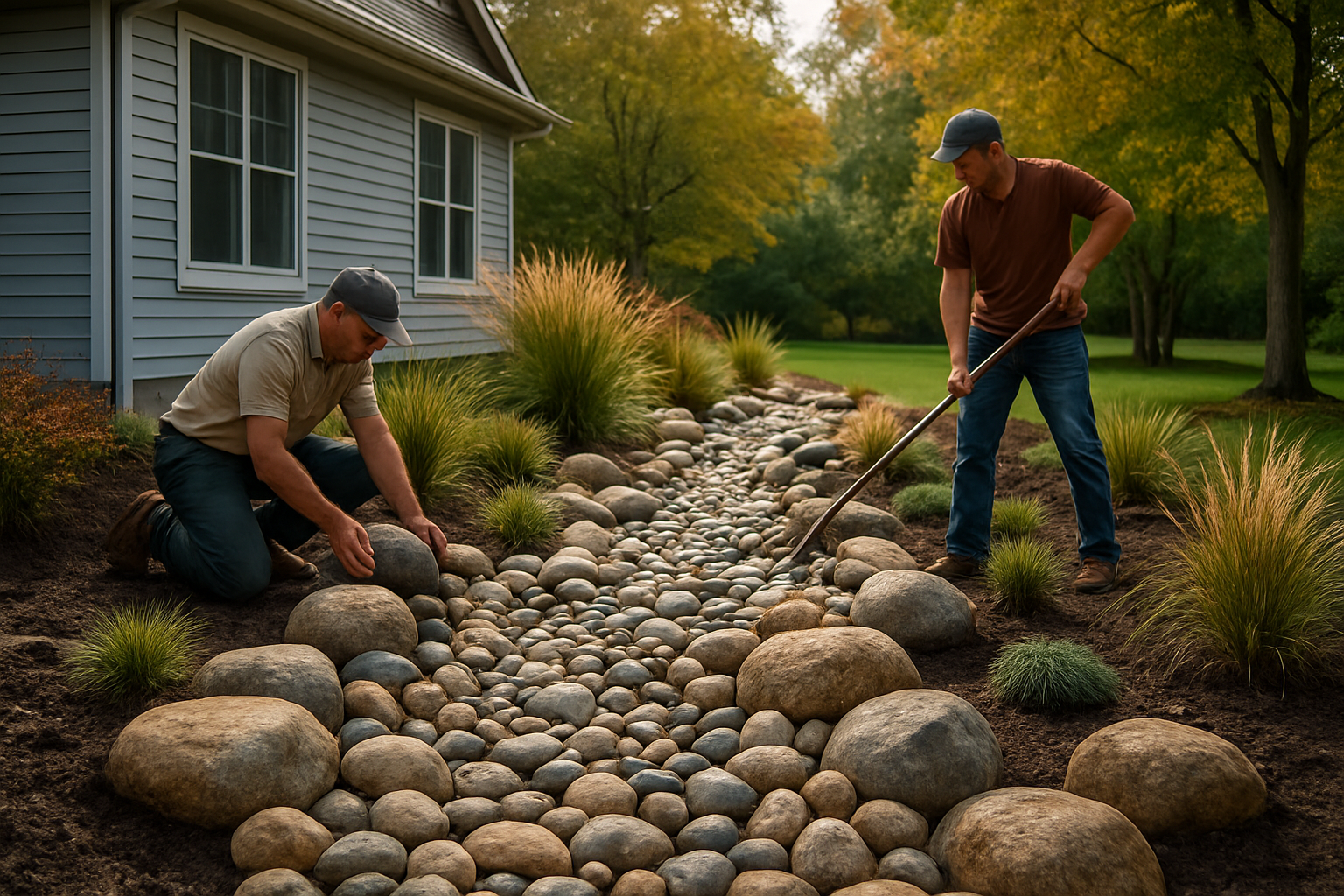
- Creating a decorative dry creek bed to direct runoff
- Using river rock or drainage stone to slow erosion and improve water movement
- Adjusting beds and edging so water does not become trapped near the house
At Distinctive Lawn & Landscape Inc, we look at both function and appearance. A drainage solution should work well, but it should also fit naturally into your landscape design. A dry creek bed, for example, can solve a runoff issue while also adding texture and curb appeal.
Improve Soil Conditions Before the Ground Freezes
Drainage problems are not always caused by slope. Sometimes the issue is compacted soil. Heavy clay soils, common in many areas of Southeast Minnesota, can hold water near the surface. When soil is compacted, rainfall cannot soak in efficiently, and puddles form even if the yard looks relatively level.
September is an excellent time to improve soil health. Cooler temperatures reduce stress on turf, and fall moisture helps new seed and roots establish. Depending on the site, drainage-related lawn improvements may include aeration, topdressing, soil amendments, regrading, or reseeding.
Healthy soil acts more like a sponge. It absorbs water, supports deeper roots, and reduces runoff. When combined with proper grading, soil improvement can make a noticeable difference before winter arrives.
Choose the Right Plants for Wet Areas
Plant selection also plays a role in drainage. Some areas of a yard naturally receive more water than others. Rather than fighting the site, we can often design with it. Moisture-tolerant plants, ornamental grasses, and deep-rooted perennials can help stabilize soil, reduce erosion, and absorb excess water during rainy periods.
For Rochester landscapes, plant choices need to handle both wet conditions and cold winters. That is where local experience matters. Plants that look great in September still need to survive January. Choosing hardy, site-appropriate plantings can turn a problem area into a beautiful feature.
Examples of landscape features that can work well in drainage-conscious designs include rain gardens, native planting areas, berms, and layered foundation beds. The right design depends on where water is coming from, where it needs to go, and how the space is used by your family.
“We had a low, soggy area near our patio that turned icy every winter. Distinctive Lawn & Landscape reshaped the area, added drainage rock, and made it look like it had always belonged there. The yard is easier to use, and the water finally moves away from the house.”
— Rochester, MN homeowner
Protect Patios, Walkways, and Retaining Walls
Drainage is especially important around hardscapes. Patios, walkways, and retaining walls need a stable base. If water gets trapped underneath and freezes, expansion can cause heaving, settling, or uneven surfaces.
Before winter, watch for these warning signs:
- Puddles forming on or next to paver patios
- Soil washing out along walkways or steps
- Retaining wall areas staying wet long after rain
- Mulch or rock being pushed out of beds by runoff
- Low spots where water collects and later freezes
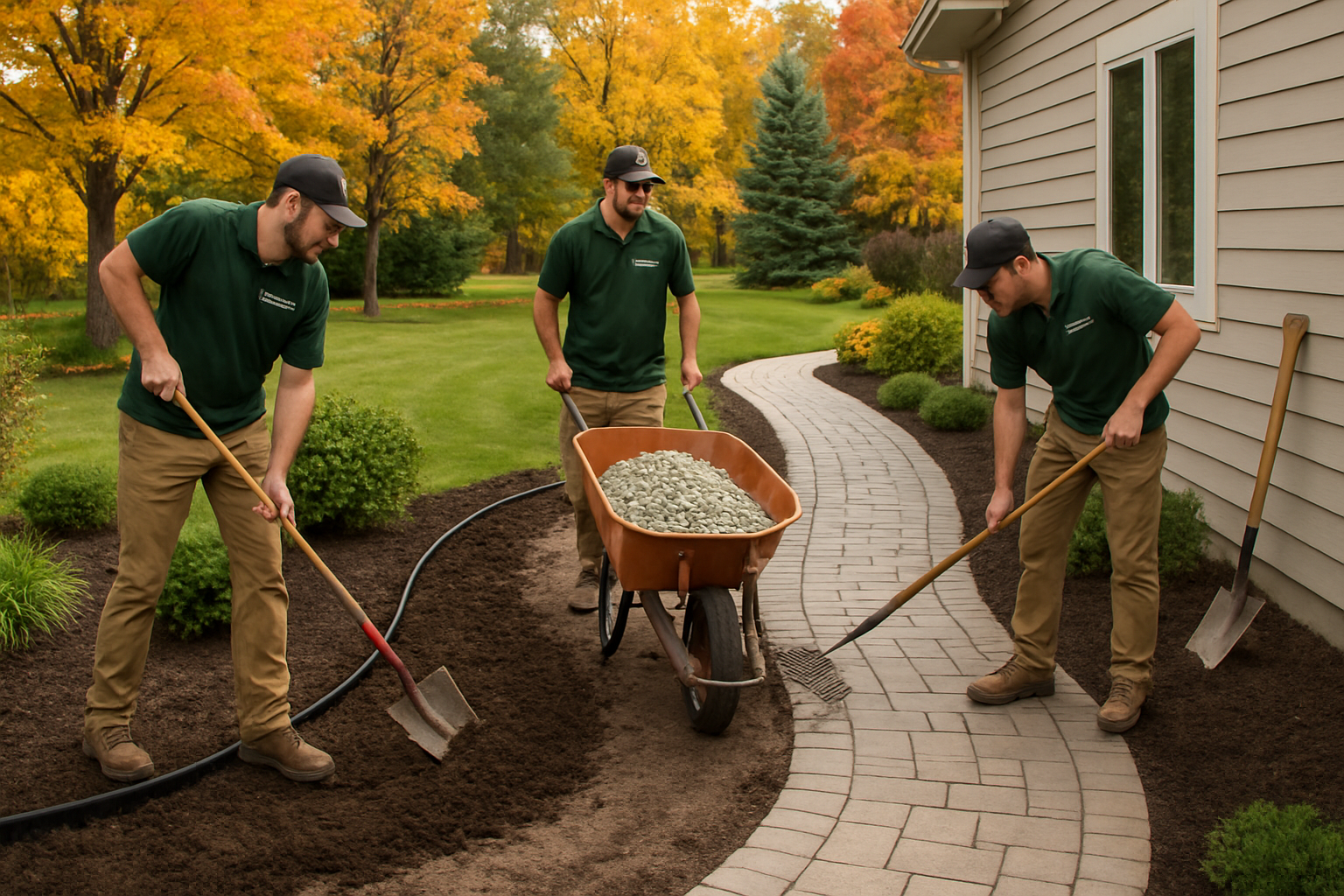
Correcting these issues may involve reworking the base material, adding drainage stone, installing drain tile behind walls, adjusting the grade, or redirecting water before it reaches the hardscape. Addressing these concerns in September can help prevent costly repairs after winter.
Why Choose Distinctive Lawn & Landscape Inc?
When it comes to drainage, every yard is different. A quick fix may move water from one problem area to another. That is why it is important to work with a landscaping company that understands how grading, soil, plants, hardscapes, and Minnesota weather all work together.
Distinctive Lawn & Landscape Inc is based right here in Rochester, MN. We understand the local climate, soil conditions, freeze-thaw cycles, and the way September weather can quickly turn into late-fall freeze-up. Our team focuses on practical, attractive solutions that are built to last.
Homeowners choose us because we offer:
- Local experience: We design and install landscapes for Rochester and Southeast Minnesota conditions.
- Functional design: We create drainage solutions that solve problems while improving curb appeal.
- Professional installation: Proper grading, materials, and workmanship matter when water and winter are involved.
- Honest recommendations: We look at the whole property and recommend solutions that make sense.
- Year-round perspective: We think beyond September and plan for snow, thaw, spring runoff, and long-term performance.
Schedule Drainage Improvements Before Freeze-Up
If you noticed standing water, soggy turf, washed-out mulch, or icy trouble spots last winter, September is the time to take action. Waiting until the ground freezes limits what can be done, and waiting until spring often means dealing with mud, runoff, and repair work first.
Landscaping can do more than beautify your property. It can protect your home, improve safety, reduce maintenance, and help your yard handle Rochester’s changing seasons. With the right drainage improvements now, you can head into winter with more confidence and enjoy a healthier landscape next spring.
If you are ready to solve drainage issues before freeze-up, contact Distinctive Lawn & Landscape Inc in Rochester, MN. We would be happy to evaluate your property and recommend a solution that works for your home, your landscape, and our Minnesota weather.
